Isla del Encanto, Instant Inclusion: How to Get a Free Government Cell Phone in Puerto Rico (2026)
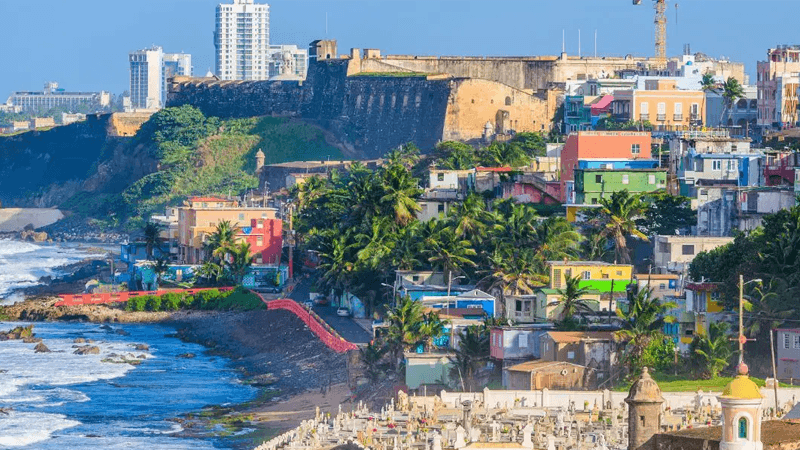
Puerto Rico is one of the friendliest places in the United States to get on Lifeline. The federal $9.25 monthly benefit gets a roughly $5 territorial top-up from the Fondo Universal de Servicios, which means your combined monthly discount usually lands around $14.25 — enough that most island providers can offer a completely free wireless plan with unlimited talk, text, and several gigs of high-speed data. And because the federal verifier is hooked directly into the Departamento de la Familia, most PAN beneficiaries get approved in minutes without ever uploading a document. This guide walks you through who qualifies, which carrier makes sense for where you live (Claro? Liberty? a mainland MVNO?), and how to handle the two quirks that trip up most Puerto Rico applicants: addresses and apellidos.
What Is Lifeline?
Lifeline is a permanent federal program — not to be confused with the Affordable Connectivity Program, which ended in 2024. It takes $9.25 off your monthly phone or internet bill if your household qualifies. The program is overseen by the FCC and run day-to-day by the Universal Service Administrative Company (USAC). In Puerto Rico, the local regulator — the Junta Reglamentadora de Telecomunicaciones (JRT), sometimes called NET — adds its own state-style supplement on top.
What you typically get on the island:
- A free smartphone (most providers ship a basic 4G or entry-level 5G Android)
- Unlimited talk and unlimited text
- A monthly chunk of high-speed data — usually 4.5 GB to 15 GB depending on carrier
- Free domestic long-distance to the mainland, and on some plans 200 free minutes to Mexico
- No contract, no credit check, no activation fee
The Puerto Rico Bonus: A ~$5 Territorial Top-Up
The Fondo Universal de Servicios is the island's universal-service kitty, funded by surcharges on local telecom services. JRT runs it. Some providers list the breakdown line by line — for example, WorldNet Telecommunications shows $9.25 federal + a $1.50 territorial credit + a $6.50 voluntary carrier allowance, totaling a $13.25 discount on home phone service. Most mobile carriers don't itemize anything; they just zero out the bill.
The combined federal-plus-territorial benefit is the reason Puerto Rico Lifeline plans look more generous than the federal-only equivalents in the mainland: higher data caps, free hardware that's often a step nicer, and better international calling.
Do You Qualify?
You qualify for Lifeline in Puerto Rico if you meet one of these conditions:
1. You're enrolled in a qualifying government program, including:
- PAN (Programa de Asistencia Nutricional) — Puerto Rico's nutritional assistance, the island's version of mainland SNAP. This is the most common path.
- Medicaid (Plan de Salud del Gobierno)
- Supplemental Security Income (SSI)
- Federal Public Housing Assistance (Section 8)
- Veterans Pension or Survivors Benefit
- Tribal programs (rarely applicable in PR — see the Tribal section below)
2. Your household income is at or below 135% of the Federal Poverty Guidelines — about $21,546/year for a single person, $44,550 for a family of four in 2026.
Only one Lifeline benefit per household. In multi-generational PR housing — abuela in the casita, dad's family in the main house, the porch suite in back — the federal system often flags everyone at one address as a single household. If you and another adult at the address don't share food costs and bills, fill out the Household Worksheet to claim separate benefits.
Instant Approval Through PAN
This is the part that makes Puerto Rico stand out. USAC's National Verifier has a direct data-sharing arrangement with the Departamento de la Familia, which administers PAN. When you apply and check the PAN box, the system pings the Departamento, gets a "yes" or "no" back, and approves you without any document upload.
Roughly 7 in 10 PR applicants clear this way. If you happen to be in the gap — PAN application still pending, name spelled slightly differently than the case file, or you're applying with income only — you'll be asked for paperwork. More on that under "Common Problems."
Choosing a Provider in Puerto Rico
Puerto Rico is one of the few places in the U.S. where you can pick between island-native facilities-based carriers (the companies that actually own the towers) and mainland MVNOs (resellers that ride on top of someone else's network). That choice matters more here than on the mainland because Verizon, for example, doesn't run its own towers in PR — its Lifeline brand, SafeLink, leans on roaming agreements.
| Provider | Underlying Network | High-Speed Data | Hardware | Best For |
|---|---|---|---|---|
| Claro Puerto Rico | Claro (island-native) | Federal minimum bundles | Basic phones | Mountain interior + rural coasts |
| Liberty Puerto Rico | Liberty (ex-AT&T) | Up to 300-650 GB on premium tiers | Premium devices (out-of-pocket extra) | Speed in metro San Juan |
| AirTalk Wireless | Mixed | ~10 GB high-speed, then throttled | 5G smartphones and tablets | Households that want the nicest hardware |
| Assurance Wireless | T-Mobile | 10–15 GB | Free basic 5G Android | San Juan metro, Bayamón, Carolina |
| SafeLink Wireless | Verizon (roaming in PR) | 10–40 GB on BYOP | Mostly BYOP | Bring-your-own-phone in cities |
| Life Wireless | AT&T / Liberty | 4.5 GB | Free entry-level Android | Coastal areas with solid Liberty signal |
| Cliq Mobile | T-Mobile | 6 GB + 200 min to Mexico | Free Android (4G or 5G) | Simple sign-up, family in Mexico |
| TruConnect | T-Mobile | 4.5 GB + 200 min to Mexico | Free SIM or device | Light users |
Which One Should You Pick?
A regional rule of thumb:
- San Juan, Bayamón, Carolina, Guaynabo, Caguas, Ponce, Mayagüez — any T-Mobile-based plan (Assurance, AirTalk, Cliq, TruConnect) will fly. Speeds are good and 5G is widely deployed.
- Mountainous interior — Adjuntas, Utuado, Jayuya, Lares, Maricao — go with Claro if it's available, or any plan that runs on Claro's network. T-Mobile's high-band 5G doesn't punch through dense foliage and steep terrain well. SafeLink's Verizon roaming gets spotty here.
- Coastal rural — Liberty's ex-AT&T footprint is strong along the coasts, so Life Wireless or Liberty's own Lifeline plan work well.
- Want the best hardware — AirTalk is the standout for free 5G phones and tablets, especially for households with school-age kids.
- Family in Mexico — Cliq Mobile or TruConnect throw in 200 free minutes to Mexico every month.
- Already have a great phone — bring it. SafeLink's BYOP option gets you the biggest data cap on a Verizon SIM, and Assurance and Liberty added eSIM support in early 2026 for newer iPhones.
A Word on Customer Service
Reddit threads from the r/PuertoRico community describe the carrier choice as "Russian roulette" depending on municipal infrastructure. Both incumbents have rough reputations for call centers — Claro for slow administrative processing, Liberty for billing and migration hiccups after the AT&T handover. The mainland MVNOs vary too: AirTalk has positive reviews for hardware but mixed reviews for support; Assurance gets criticized for replacement-device processes; SafeLink customers occasionally hit APN setup issues. If you speak Spanish only, AirTalk and Cliq are the most bilingual-friendly. SafeLink and TruConnect default to English-first support.
How to Apply
Two main paths:
Option 1: Apply through a provider. Pick a carrier from the list above, head to their site, and they'll walk you through the federal check using their interface. If you're enrolled in PAN, this is usually fastest.
Option 2: Apply through the federal portal. Go to LifelineSupport.org — pre-approval there, then come back and pick a carrier.
You'll need:
- A photo ID — Real ID-compliant Puerto Rico driver's license, PR state ID, or U.S. passport
- Date of birth, last 4 of your SSN
- Your physical address (more on this in a sec)
- Proof of program enrollment (PAN benefit letter, Medicaid card) — only if you don't auto-confirm
- Three months of pay stubs or a tax return — only if you're income-qualified
After you're approved, the carrier ships you a SIM card or phone within about 7–10 business days.
Common Problems and How to Fix Them
A few patterns repeat in PR more than on the mainland:
Address won't validate. Puerto Rico addresses — especially in rural barrios and in zones still under post-storm reconstruction — often trip up the federal portal's standard postal address checker. The fix: the portal has a map tool that lets you place a marker on your home, and the lat/lon coordinates count as your physical address. Use this if the standard form rejects what you typed.
TPIV (identity check) fails. Almost always a name issue. Spanish naming in Puerto Rico uses two surnames — your father's apellido and your mother's apellido. The Social Security Administration usually has both on file. When you apply with only one surname, the federal identity check can't match. The fix: re-enter your name exactly as Social Security has it. Use your driver's license, state ID, or birth certificate as the reference, and make sure both apellidos go into the application.
PAN case is "pending" instead of "active." The federal system returns an "Application Not Found" error. The fix: upload your most recent benefit letter from the Departamento de la Familia, which shows your case is alive even if it's mid-renewal.
Under-18 error. Lifeline is for adults. If you're 17 and on your own — for example, an emancipated minor — you'll need to upload your court-issued emancipation certificate.
Service stops because you didn't use it. Federal rules say a $0 Lifeline line has to see one usage event every 30 days — a call, a text, or some mobile data. Miss it, and you'll get a 15-day notice in the mail to make a single tap-of-life event. Skip that, and the line shuts off.
Tribal Lifeline in Puerto Rico
Almost never available here. The Enhanced Tribal Lifeline rate of $34.25/month requires that your home address sit on land formally recognized as Tribal by the federal government. PR's Taíno-descendant community is honored at the cultural and historical level, but the federal Lifeline program doesn't extend the enhanced rate to it. The narrow exception: if you're an enrolled member of a mainland U.S. tribe and your primary address is on qualifying Tribal land somewhere on the continent, the enhanced rate applies at that address. A primary address in PR gets the regular combined territorial benefit instead.
If your situation is unusual — you split time between PR and an enrolled tribal address, for instance — USAC's Tribal Lands Verification Tool, rolled out in March 2026, lets you confirm whether a given address qualifies before you apply.
Special Situations
Seniors
Seniors in Puerto Rico typically qualify through Medicaid, Veterans Pension, or SSI. ADFAN's senior-services arm — formally the Administración de Servicios de Edad Avanzada — provides orientation in Spanish at 787-977-8022 or toll-free at 1-888-359-7777.
Bring with you:
- Your Medicaid card or SSA-1099 (Social Security benefit statement)
- A retirement or pension statement
If you want a simple phone instead of a touchscreen smartphone, AirTalk specifically markets the AirVoice A56 and the Nokia 2760 Flip to seniors. Both have large buttons, long battery life, and SOS-style emergency calling.
Foster Youth Transitioning Out of Care
Young people aging out of foster care in Puerto Rico can qualify for Lifeline as part of their independent-living transition. The foster-care branch within ADFAN — Administración Auxiliar de Cuidado Sustituto y Adopción — runs the Independent Living Program (ILP) and can issue paperwork you can submit as proof.
- Contact: ADFAN main office, San Juan, 787-625-4900
- Bring: ILP case files, or your transition-services letter showing you're aging out
Hurricane Season
Federal rules don't pause the 30-day usage requirement during natural disasters — that's the official position. But in practice, Puerto Rico carriers have offered case-by-case extensions during major storms like Maria and Fiona. If you've been evacuated or you're going to be off-grid for weeks, call your carrier proactively. Ask them to flag your account for an emergency hold, instead of letting it go silent and getting de-enrolled automatically.
A pre-storm tip: jot down your account number, carrier phone number, and your alternate emergency contact on paper. Cell towers may go down right when you most need to reach customer service.
Veterans
PR veterans on a Veterans Pension or Survivors Benefit automatically qualify for Lifeline. Bring your annual pension verification letter or your VA award letter. The U.S. Department of Veterans Affairs Caribbean Healthcare System in San Juan can help generate replacement documentation if you've lost yours.
Your Rights as a Lifeline Subscriber in Puerto Rico
The JRT (also called NET) enforces a set of consumer protections that go a bit further than what mainland federal-only states offer.
Bill dispute window. Puerto Rico's Law 213 (the 1996 Telecommunications Act) together with the older Law 33 from 1985 give you 20 calendar days from the date your bill is issued to formally object to any charge. While the dispute is being investigated, your carrier is not allowed to shut off your service over the disputed amount. This is one of the strongest billing protections of any U.S. state or territory.
Independent ombudsman. If your dispute with a carrier — Claro, Liberty, SafeLink, anyone — doesn't go your way, the Independent Office of Consumer Protection (OIPC) acts as a free advocate for low-income utility and telecom customers. They can take cases the JRT didn't fully resolve.
No early termination fees. Federal rule applies: you can leave a Lifeline carrier whenever you want with no penalty.
Number portability. Your 787 or 939 number can move to any Lifeline carrier serving the island, free.
Slamming and cramming protection. It's illegal in PR for a carrier to switch your service or add charges without your consent. Report it to JRT.
Where to complain. JRT: 787-756-0804 or jrtpr.pr.gov. PAN or Medicaid issues: Departamento de la Familia at 787-294-4900. Federal eligibility issues: the USAC support line — 1-800-234-9473 — handles National Verifier disputes.
FAQ
Is Lifeline ending in 2026?
No. Lifeline is permanent, paid for by the federal Universal Service Fund — that's a totally separate pot of money from the (now-ended) Affordable Connectivity Program. It's not going away.
Can I use an iPhone on a Lifeline plan in PR?
Yes. Most carriers offer Bring Your Own Phone (BYOP). Pop a SafeLink, Assurance, or TruConnect SIM into your unlocked iPhone and you're set. Newer eSIM-only iPhones — iPhone 14 and later — added Lifeline eSIM provisioning on Assurance and on Liberty's Lifeline tier in early 2026.
Does my Lifeline plan include calls to the U.S. mainland?
Yes, most do, and many include international minutes too. Cliq Mobile and TruConnect throw in 200 free minutes per month to Mexico as part of their standard bundle.
My PAN case is open but the system rejected me. What now?
The federal system pulls a snapshot of your PAN status. If your case is "pending" rather than "active," upload your most recent benefit letter from the Departamento de la Familia. That manually proves the case is real.
How often do I have to recertify?
Once a year. If you qualified through PAN, the renewal usually happens automatically through the Departamento de la Familia data link. If you qualified through income, expect to upload paystubs or a tax return again. Don't ignore mail or texts from USAC during your annual window.
Can my Lifeline phone replace my home internet?
Sort of. Federal rules now require any Lifeline-supplied phone to include hotspot functionality. That means you can tether a laptop or tablet to your phone for school or remote work — but you're capped by the high-speed data on your plan, so it's a partial fix, not a full home-broadband replacement.
I share a house with my parents and brother. Can each adult have their own Lifeline phone?
Only if each adult is a separate "economic household" — meaning you don't share income or expenses. Submit the Household Worksheet for each separate household at the address.
The Bottom Line
Puerto Rico is one of the easiest places in the U.S. to get on Lifeline because the federal verifier talks directly to the Departamento de la Familia. If you're on PAN, the application is usually a few minutes of work and approval is instant. The combined $14.25 monthly benefit, paired with island-native networks like Claro and Liberty alongside national MVNOs, means a free wireless line with real high-speed data is genuinely available to most low-income PR residents.
Quick pre-flight checklist before you start the application:
- Have your PR driver's license or state ID handy
- Know your last 4 SSN digits
- Write your full legal name with both apellidos — exactly as the Social Security office has you
- Have your PAN, Medicaid, or other program letter open in another tab, just in case
- If your address has rejected before, plan to use the map-pin tool
If you hit a snag, the JRT (787-756-0804) and OIPC are unusually helpful for an island regulator. Start there.
¡Buena suerte!
Related Articles
Badger State, Bigger Benefit: How to Get a Free Government Cell Phone in Wisconsin (2026)
Wisconsin stacks a state Universal Service Fund supplement on top of federal Lifeline, so a qualifying household can get up to $18.50 a month — one of the biggest combined benefits in the country. Here's how to claim it, why you must ask each carrier if they're 'federal-only,' and the Wisconsin-specific debt rule that can block your enrollment.
July 11, 2026Mountain State, Mailed Method: How to Get a Free Government Cell Phone in West Virginia (2026)
West Virginia runs two low-income phone programs side by side: standard federal wireless Lifeline plus a state Tel-Assistance program that caps qualifying wireline service at $7.50 for anyone 60+ or disabled. Here's how each track works, what the Green Bank Quiet Zone means for wireless plans, and how to file the paper-only ES-TA-2 form with your local DHS office.
July 4, 2026